Back-to-School Schedule Check: What Parents Should Look For Before Classes Begin
A little bit of checking now saves a lot of headaches later — here's what to look for before the excitement of a new schedule takes over.
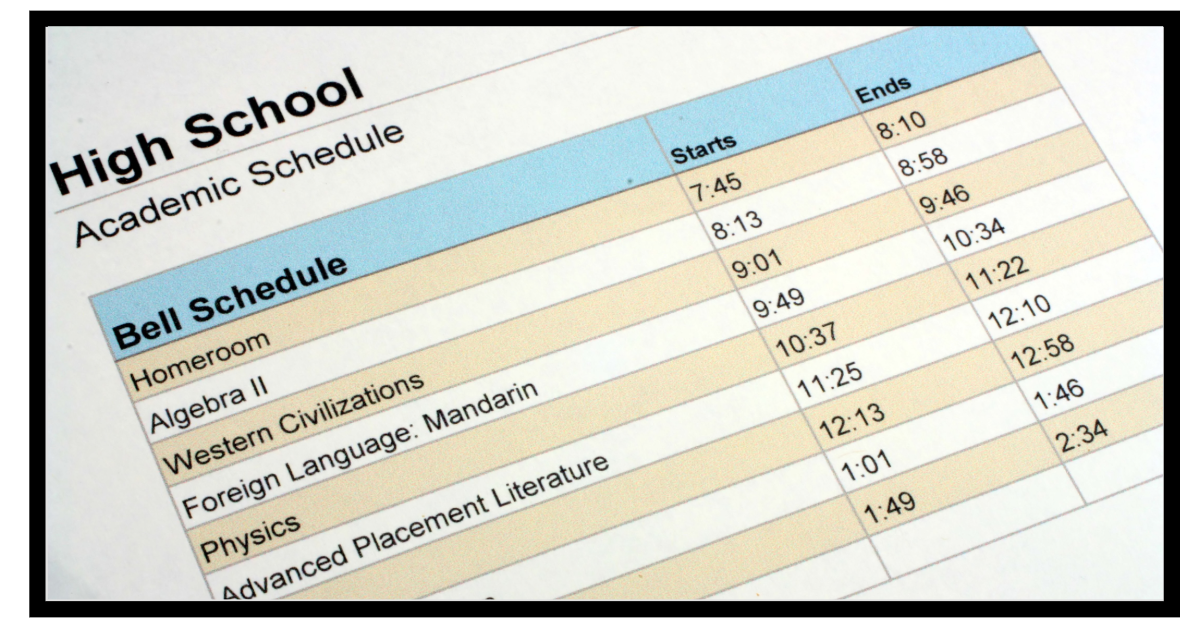
When back to school time arrives, it’s typical to see students begin comparing schedules with friends, excited to see who has classes together, who got the teacher they like, and who got the classroom in the "good hall" instead of clear across the building. As a parent, it's fun to watch, but it's also worth taking a few minutes to actually look at that schedule with your student before allowing too much excitement to take over.
Schools typically handle course enrollment sometime around December or January. This gives the administration time to work out course sizes, teacher numbers and start arranging courses to fit the most schedule requests. Unless your school is like my husband's; they gave students the master schedule and let them do the critical thinking and problem solving to fit in the classes they needed and wanted. Then admin started filling the seats with seniors first. It seems like a pretty smooth idea to me. However, it can't be fun to be the last freshman to register. By then, most classes are probably full, and that poor kid’s plan has likely been shuffled a few times already.
Building a school wide schedule that fits everyone's requests is a huge, complicated process. Sometimes the requests and needs don't align, and things get changed or missed along the way. So when this time of year comes around, sit down with your student and check that schedule together!
Quick Schedule Checklist
- Check for courses your student has already completed with a passing grade
- Confirm the schedule meets state and school graduation requirements
- Verify prerequisites are met for every course
- Make sure courses match what your student actually requested and still wants
First, check for any courses your student has already completed with a passing grade. I know, it sounds silly. One year during course request time, I discovered a student had retaken the same math class she had passed the year before. She had originally taken the sophomore level class as a freshman, and then, through a glitch, all sophomores were enrolled in that same class; not all of them were manually caught and changed. She was timid and thought the class was easy, but math had always been her strong subject, so she just went along with it. This became a real issue as she prepared to graduate because the school required four unique math credits, and she had two that were identical. So, check for classes your student has already taken. You should be able to access a draft transcript that shows courses completed with passing grades. If you can’t access it, your student can.
While you have that transcript pulled up, also check graduation requirements. Each state sets minimum graduation requirements, and some schools or programs add their own on top of that. These requirements are usually listed on your school's website, often under course offerings or counseling pages. Compare the schedule to these requirements and confirm your student is enrolled in the courses they need. Use the transcript draft to make sure what they've already passed, plus that what they're enrolled in now, lines up with what's required.
Once you've confirmed your student is on track with grad requirements and isn't repeating anything already passed, check that they meet all the prerequisite requirements for the current courses on their schedule. Yes, I once had a student enrolled in Photography 3 with zero photography experience. The prerequisites were Photography 1 and 2, so jumping straight to level 3 was not where he wanted to be. Some schools will waive prerequisites in certain circumstances, but if that conversation hasn't happened with the school counselor yet, then a schedule change is most likely necessary.
Next, check that the courses your student is enrolled in are the ones they actually requested and still want. This one usually has less flexibility, but if your student was enrolled in band and has no desire to play an instrument, the school can typically find something else instead. Understand that sometimes the schedule just doesn't work out in your student's favor. In years past where I worked, it seemed like AP Physics and band always shared the same students and could never be scheduled during the same period. When the schedule couldn't work like that, it meant students had to choose one or the other.
Even rarer is approval to change because of the teacher. Sorry, there are teachers in the world who aren't everyone's cup of tea, and it happens. Rarely will a schedule change be made to accommodate a teacher preference. Rarely. In my decade of teaching, I've seen it happen maybe three times, and only for extenuating circumstances. Your student is better off learning a few skills for navigating challenging professional relationships than counting on a schedule change. If your kiddo finds themself in this situation, here are a few book suggestions worth passing along to them: Crucial Conversations by Joseph Grenny and Kerry Patterson, How to Deal with Difficult People by Gill Hasson, and Surrounded by Idiots by Thomas Erikson. A quick internet search will turn up plenty more, and there are also numerous podcasts on getting along with people you can't stand. Most of these resources are written for the workplace because, surprise, we all eventually have to deal with people we don't appreciate as much as others. Feel free to read these books along with your student and discuss it together.
My best advice to pass along: find something about the person you can admire. It helps. I've worked with teachers I struggled to align with, but often it was because they had the energy and drive to fight battles I didn't have in me. I really admired them for that, and it helped. Typically, those are the same battles students struggle to align with that teacher on too, but I support the teacher's choice and instead help the student learn to navigate the relationship.
A hard class with a teacher your student doesn't love is still a chance to practice a skill they'll use for the rest of their life: getting along with people who aren't their favorite.
So what do you do if you find a real problem, not just a preference, but an actual error, a missing requirement, or a prerequisite that was overlooked? Most schools have a policy in place for requesting a schedule change, and it's usually posted on the school website. Find it and follow it. Schools put these procedures in place for a reason, and following them is the fastest way to get a real issue looked at.
If you can't find a posted procedure, have your student email their counselor or whoever handles scheduling at your school, and ask what the process is. Have them explain why they'd like to request a change in that same email. This does two things. It shows the school your student is willing to follow the process rather than skip straight to a complaint, and it gives them a clear, legitimate reason on record. If it turns out there isn't a formal procedure in place, that email also hands the school exactly what they need to go ahead and make the change.
News Flash…this email should come from your student's own account, not yours. It's their schedule and their responsibility to advocate for it, and that's an invaluable skill to practice. There’s nothing wrong with assisting them in drafting the email, but don’t write it for them. That said, we recommend you're copied in on the email, so you're kept in the loop and can follow up if needed.
One more thing: don't sit on this. Whatever needs addressing is best handled before school starts or within that first week. Schedules get much harder to change once the year is underway and classes have settled in, so if something looks off, act on it early.
How to Request a Schedule Change
- Check the school's website for a posted procedure and follow it
- If there's no posted procedure, have your student email their counselor to ask what the process is
- Have your student explain, in that email, why they're requesting the change
- Ask to be copied on the email so you stay in the loop
- Don't wait — request changes before the first week of school if possible
At the end of the day, schedule season is really just a reminder that a little bit of checking now saves a lot of headache later. Sit down with your student, pull up that draft transcript, compare it against graduation requirements, confirm prerequisites, and make sure the classes in front of them are the ones they actually meant to sign up for. If something is genuinely wrong, follow the school's procedure, have your student send that email early, and keep yourself copied in. And for the one thing that almost never changes, the teacher, remember that a hard class with a teacher your student doesn't love is still a chance to practice a skill they'll use for the rest of their life: getting along with people who aren't their favorite. That's worth just as much as anything on the transcript.